
Moss Mine filed for bankruptcy July 2024
What the BLM FONSI actually concludes
- It covers only 3.01 acres of roads and drill pads on 12 claims (p. 1).It finds “no long-term detrimental effects to soil, vegetation, wildlife, or water resources” and “negligible” effects on groundwater (pp. 3–4).It says the EA found no “highly uncertain effects or unique or unknown risks” (p. 4).The asymmetry: In its “quality of life” section (p. 5), the FONSI cites long-term benefits “if exploration activities locate sufficient resources to merit longer term mining.” So it credits a possible future mine with jobs and gold supply, but neither it nor the EA examines what that mine would do to the land, the water or nearby homes.
How open-pit gold mining differs from exploration
The FONSI’s reasoning depends on the work being small, temporary and fully reclaimed. Open-pit heap-leach mines are none of those things:
- Scale: Hundreds of acres instead of 3. The pit and the waste-rock piles are permanent. Reclamation softens them but doesn’t erase them.Chemicals: Ore is piled on lined pads and soaked in cyanide solution. The whole system depends on liners and ponds that can leak.Water: Mines pump large volumes for processing and dust control, and sometimes to keep the pit dry. Outside Arizona’s Active Management Areas, as noted earlier, the state places few limits on that pumping.Daily life nearby: Blasting, crushing, dust, truck traffic, round-the-clock lighting, and power lines.How reliable the predictions are: The best-known U.S. review of hardrock mines (Kuipers & Maest, 2006) found that 100 percent of mines predicted compliance with water quality standards before operations began, 76 percent of mines studied in detail exceeded water quality standards due to mining activity, and mitigation measures failed at 64 percent of the mines studied in detail. In fairness, industry critics said the studies were sponsored by a group that focuses on opposing mining development. Even so, the study is widely cited, and an EPA regional mining coordinator called it an “important study”. earthworks.org +2
The Moss Mine as a local example
How it was approved. The same Kingman Field Office approved the Moss expansion with an Environmental Assessment and a FONSI, not a full Environmental Impact Statement. The Phase 3 Moss Mine Expansion was analysed in a Final Environmental Assessment, with the Decision issued March 18, 2020, and that expansion covered about 497 acres of BLM land (Moss Decision Record). A no-significant-impact finding has been used here even for a working mine, not just for drilling. secWhat happened afterward:
- Water-quality violations. ADEQ issued a May 21, 2019 NOV for nitrate exceedances, and an August 29, 2024 NOV citing Phase 3A pond liner integrity and Q1-2024 exceedances of aquifer quality limits for free cyanide, nitrite-N and dissolved selenium in two monitoring wells. Both were resolved, and the current owner reports the site has been in good compliance since September 2025. secBankruptcy. Elevation Gold entered bankruptcy protection at the end of July 2024 and mining operations at the Moss mine ceased. The sale allowed the company to eliminate more than $60 million of liabilities associated with the Moss mine. e-mje-mjReclamation money. When Mako Mining bought the mine, it booked a reclamation and rehabilitation obligation of $14,260 thousand, about $14.3 million. The company’s filings show restricted cash held for reclamation bonds of $3.3 million, of which $1.5 million was released to the Company on June 20, 2025. By year-end, restricted cash held for reclamation bond purposes was $1,768 thousand, about $1.8 million. Those filings may not show every form of bonding, such as surety bonds, so the full guarantee could be larger. On these figures, though, the cleanup estimate is much larger than the cash set aside. Mako Mining Corp. - Form 6-K - FY2025 +3Claim staking. In 2021, Golden Vertex initiated an extensive claim staking project that nearly tripled its land position in the Oatman Mining District. That’s similar to the staking now surrounding your subdivision. sec
What this means for you
The FONSI is probably right that 25 drill pads won’t do lasting harm, provided the company follows its plan. Our own observations suggest it hasn’t always done so. The real risk is a future mine, and the Moss record shows three things that matter for that:
- A finding of no significant impact has been used for a 497-acre mine, so a full Environmental Impact Statement isn’t guaranteed. Liners and monitoring wells caught problems, but only after cyanide had shown up in groundwater.Bonds and bankruptcy can leave the public holding the cleanup risk.
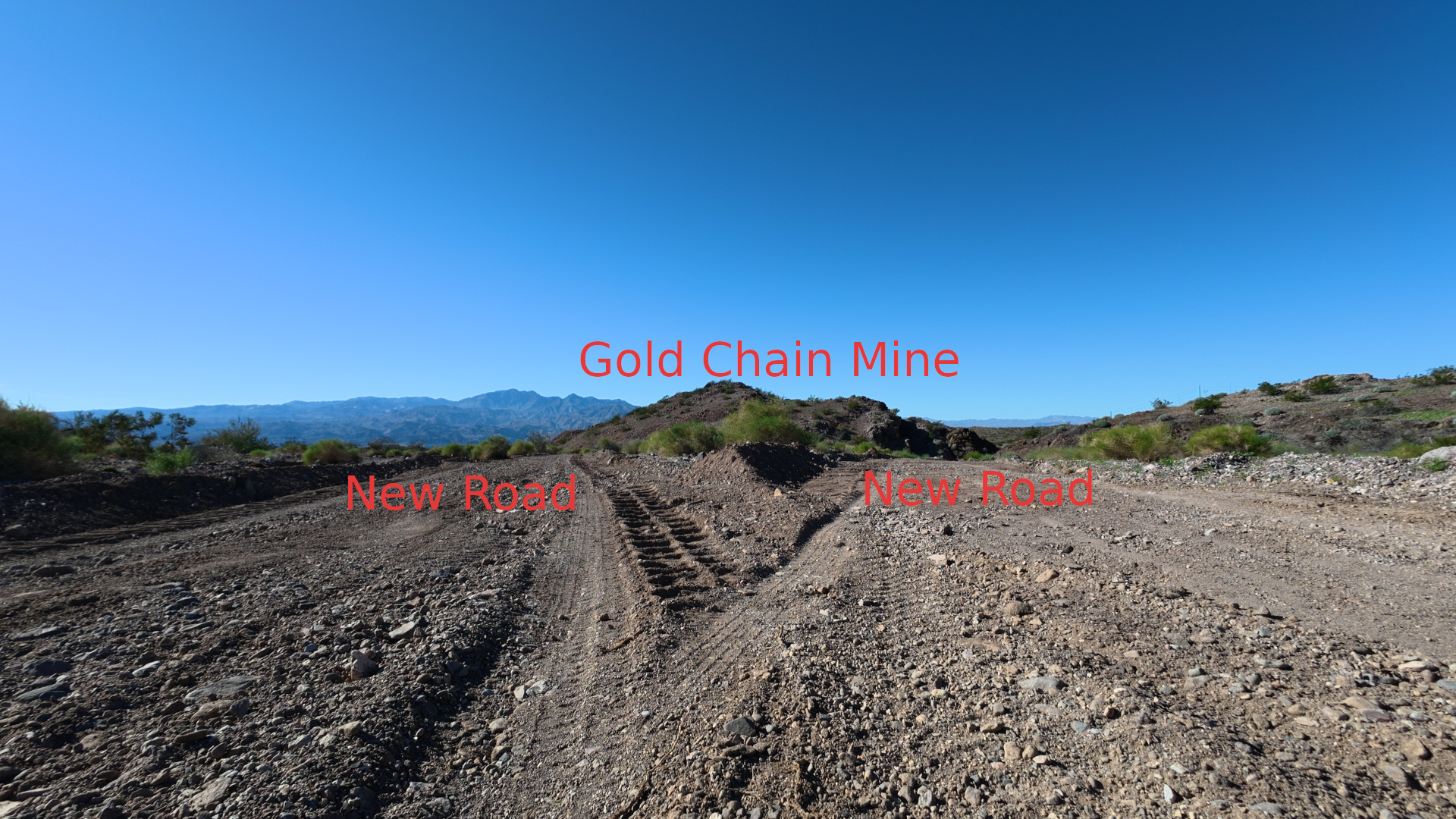
Prepared for residents of Mohave Lake View Ranchos · Nov 9, 2026BLM's Kingman office found "no significant impact" from West Point Gold's Gold Chain drilling on March 17, 2026. That finding covers only exploration. The same office reached the same finding for the Moss Mine expansion near Oatman in 2020, and the Moss record since then shows what an operating open-pit mine can bring. What was approved at Gold Chain: 25 drill pads, about 1 mile of new road, 3 acres of disturbance, and holes up to 1,500 ft deep. Drilling may run 24 hours a day for about 18 months. The reclamation bond is $12,459. The Environmental Asessment never mentions Mohave Lake View Ranchos or residents' wells.
Promises vs. the record
| IssueGold Chain FONSI says (Mar 2026)Moss Mine record (approved by FONSI, Mar 2020) |
| Size3 acres, temporaryAbout 497 acres of BLM land; permanent pit and waste pilesGroundwater"Negligible" effects; no long-term harm to waterAug 2024 violation: pond liner integrity, and monitoring wells over limits for free cyanide, nitrite and seleniumUncertaintyNo "highly uncertain effects or unique or unknown risks"Cyanide leach pads and ponds depend on liners that can failReclamation money$12,459 bondReclamation obligation of about $14.3 million; about $1.8 million in restricted cash for bonds at end of 2025Who pays if it failsNot addressedOperator went bankrupt in 2024; sale wiped out more than $60 million in liabilitiesNearby homes and wellsNot mentionedMonitoring caught problems only after limits were exceededLong-term benefitsCounts a possible future mine's jobs and goldA future mine's costs are left for a later review |
Nationally, a study of 25 U.S. hardrock mines (Kuipers & Maest, 2006) found that all predicted they would meet water standards, but 76% exceeded them. Industry groups dispute the study, which an environmental group funded. The Moss Mine's current owner reports good compliance since September 2025.
What residents can do now
- Test your well. Get a certified lab test (arsenic and metals at minimum) and record the water level. A dated "before" record is your best evidence.
- Document drilling activity. Take dated photos with GPS locations of new roads, washes, drill holes and runoff. Keep a log of noise, lights and traffic.Write to BLM Kingman (2755 Mission Blvd, Kingman AZ 86401, 928-718-3700), citing case AZAZ106743465. Ask which authorization covers work near the subdivision, the bond amounts, and to be notified of every future filing.If a mine is proposed, ask for: a full Environmental Impact Statement, groundwater modeling that includes subdivision wells, required monitoring of private wells, and a bond sized to the full cleanup cost.
Sources
- BLM ePlanning: Gold Chain Mining Project (EA, FONSI, Exploration Plan)BLM: Moss Mine Decision Record, 2020Mako Mining technical report: Moss Mine permits and violationsMako Mining financial statements: Moss reclamation obligation and bondsE&MJ: Moss Mine bankruptcy and saleEarthworks: Kuipers & Maest summary
This blog is general information, not legal advice.


0 Comments